Projects

Clustering alignment for population structure analysis

Clustering alignment for population structure analysis

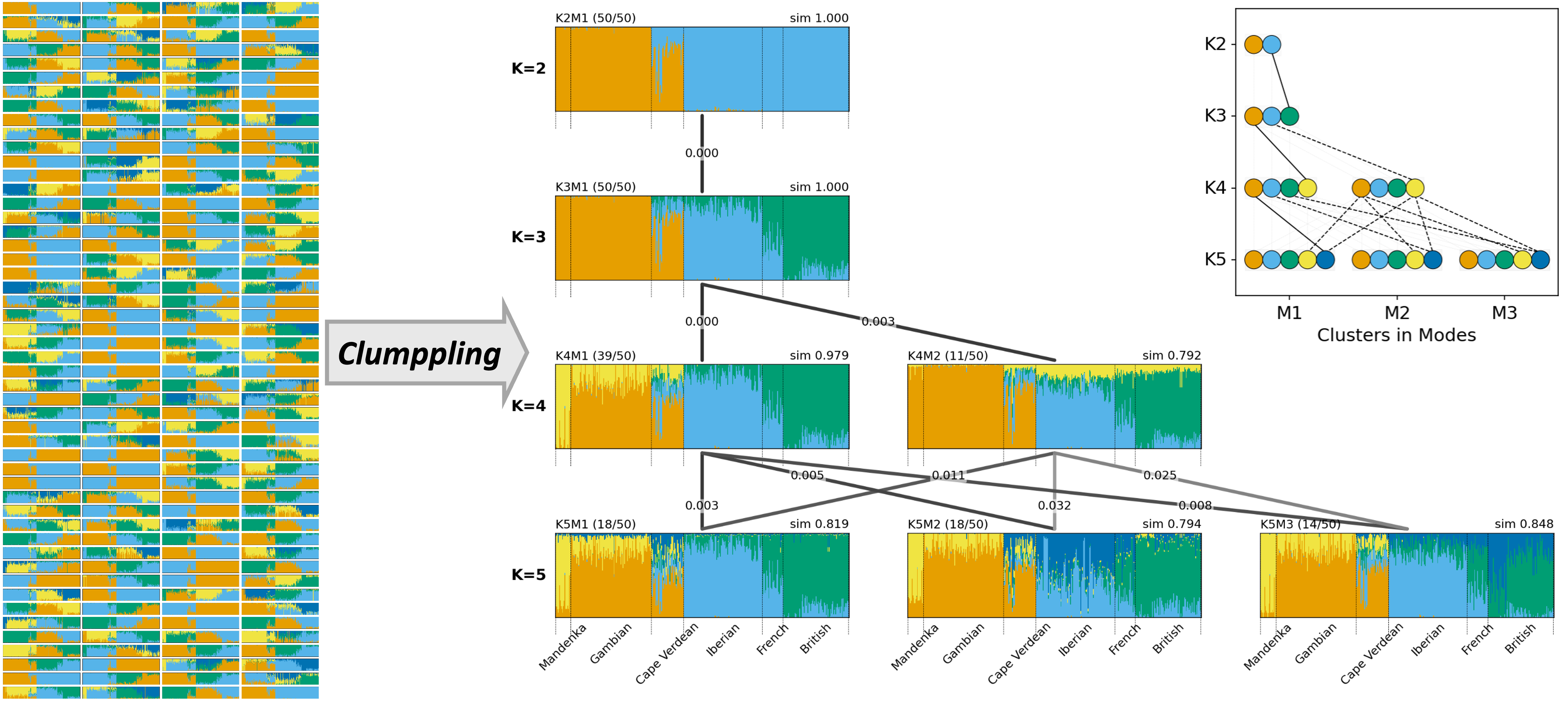
Developed methods and tools for aligning latent ancestries across repeated population structure analyses so results remain interpretable across runs and choices of K.

  • Created Clumppling for cluster alignment, mode consolidation, and visualization of correspondence across inferred population structures.
  • Built workflow support for end-to-end population structure analysis and downstream interactive visualization.

Status: published
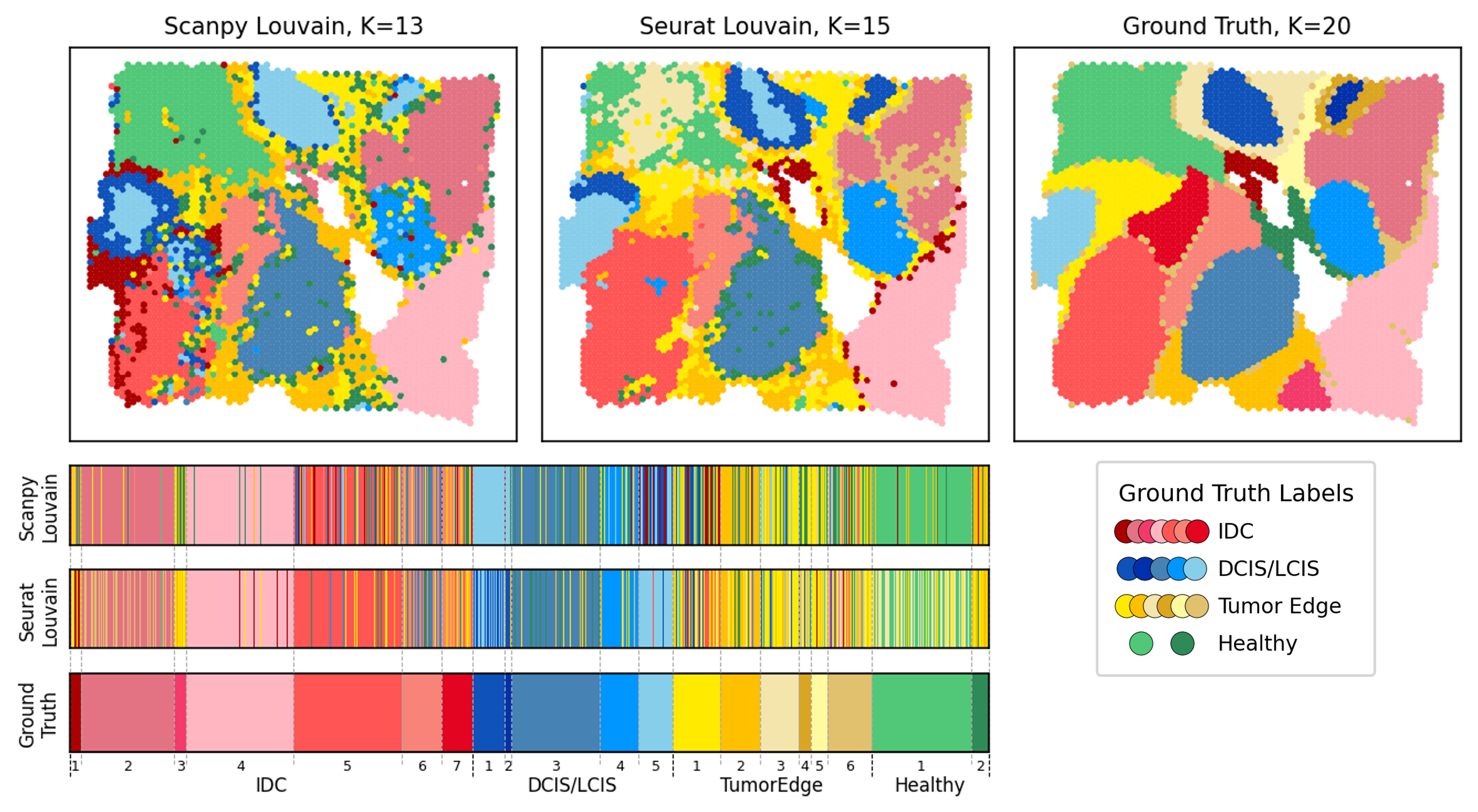
Alignment-aware single-cell clustering analysis

Alignment-aware single-cell clustering analysis

Extending clustering alignment ideas to the single-cell analysis pipeline to compare models, identify cluster-informative genes, and stabilize downstream interpretation.

  • Developing measures of clustering consistency for robust model comparison.
  • Designing feature-level interpretation metrics to surface informative genes.

Status: published

ML-based methods for multivariate genetic association analysis

ML-based methods for multivariate genetic association analysis

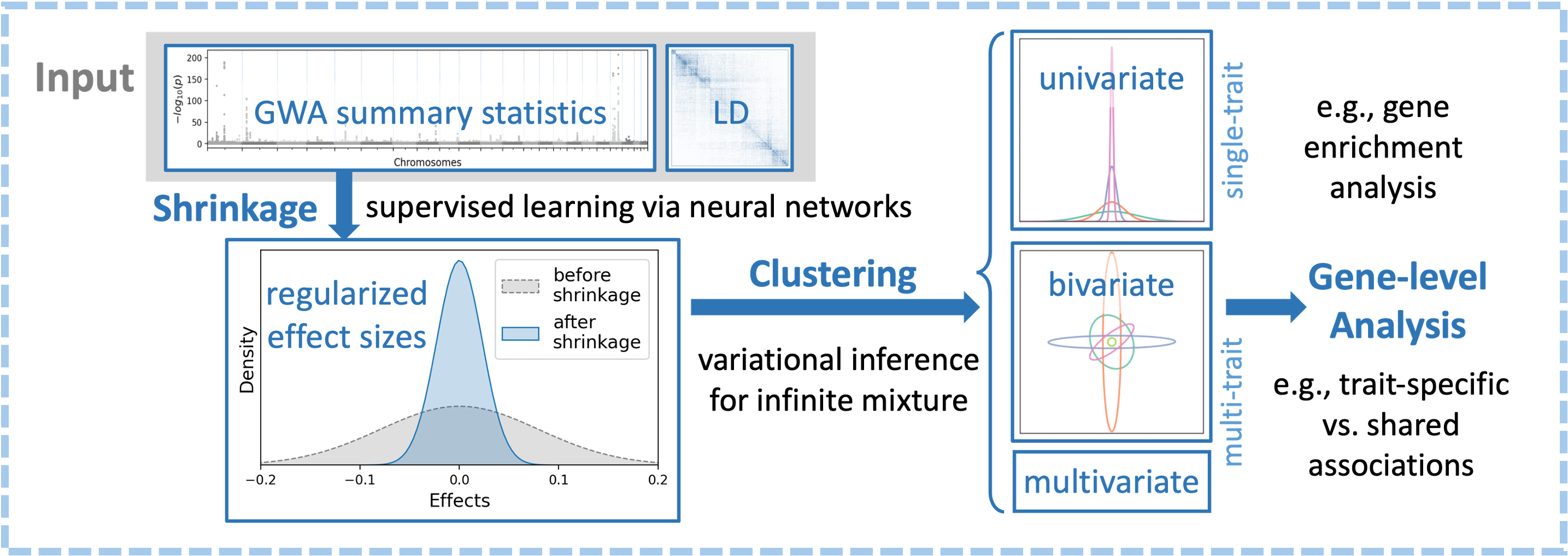
Designed ML-MAGES, a machine-learning framework for shrinkage, pattern discovery, and gene-level aggregation in high-dimensional genetic association studies.

  • Uses neural-network-based supervised learning to account for LD-induced inflation.
  • Combines effect size shrinkage with flexible clustering of multi-trait association patterns.

Status: published

Mathematical properties of allele-sharing dissimilarities

Mathematical properties of allele-sharing dissimilarities

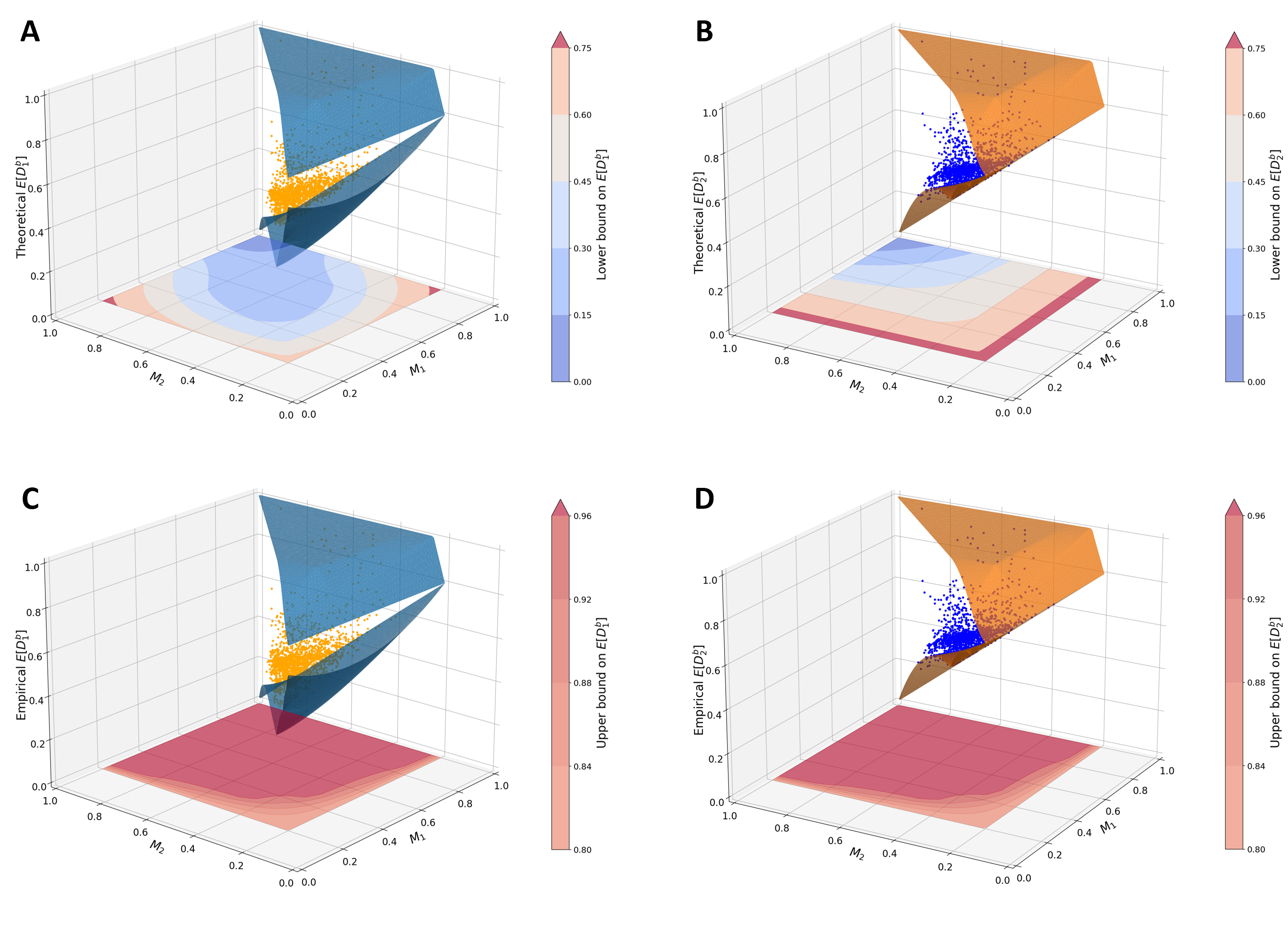
Analyzing within- and between-population dissimilarity measures as functions of allele-frequency distributions to clarify when and how these statistics should be used.

  • Derives mathematical constraints and interpretable bounds.
  • Connects theory to empirical population-genetic settings.

Status: published

Cultural evolution through population-genetic methods

Cultural evolution through population-genetic methods

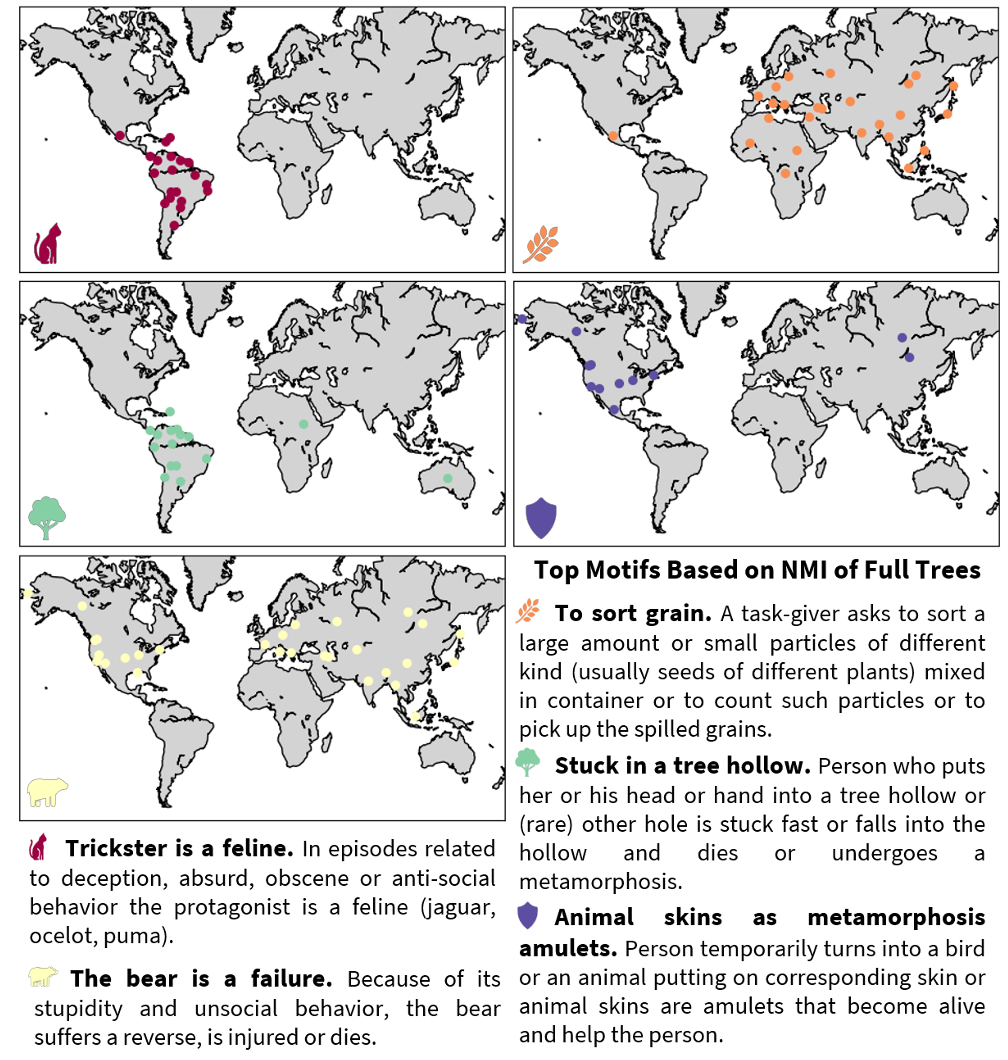
Adapts ideas from genetic evolution to study how cultural traits, social learning, and inherited conventions vary across groups and over time.

  • Uses network-based clustering to recover hierarchical structure in cultural variation.
  • Studies cultural transmission processes such as surnaming decisions and intergenerational inheritance.

Status: published